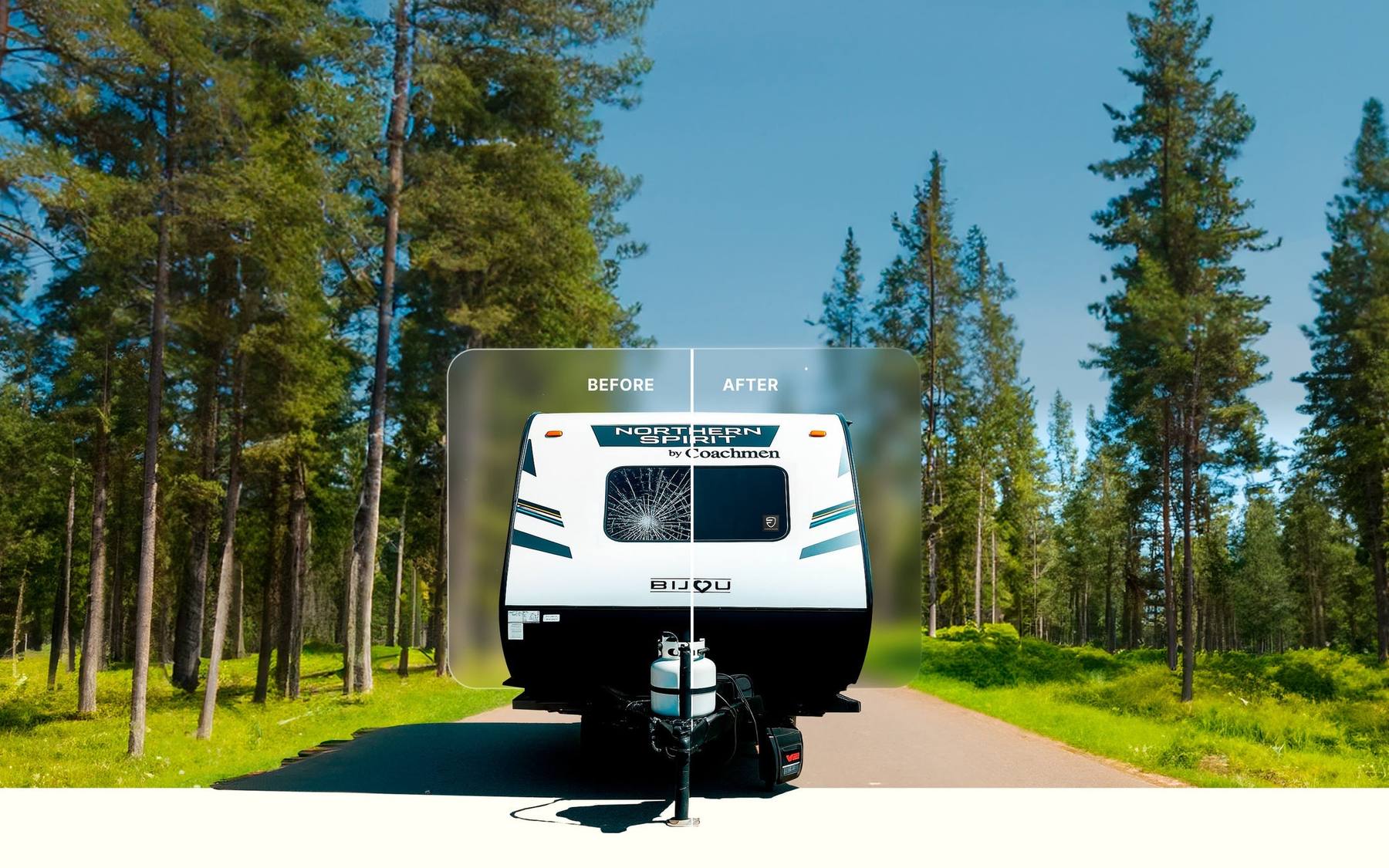
Yes, for the vast majority of RV owners. Here's the math.
A premium custom-fit windshield cover runs $349-$499. Over a 5-year ownership window, that cover prevents:
- UV damage to dashboard — typically $2,800-$6,500 to repair
- Stress crack windshield replacement — typically $3,000-$8,500
- Hail damage windshield replacement — typically $3,000-$8,500
- Sun-faded captain's chairs and trim — typically $1,200-$3,000
- Loss-of-use during repair — typically $1,500-$5,000 in hotels and missed trips
Even if your cover only prevents ONE of these issues over the rig's life, it's paid for itself 6× over. The math is one-sided for any motorhome over $30,000.
TL;DR
- Cover cost: $349-$499 (FIT custom-fit, premium tier)
- Damage prevented over 5 years: $4,000-$15,000+ depending on climate
- Break-even point: typically 12-18 months for sun-belt owners
- Marginal cases: older rigs prepping for sale, sub-$15K travel trailers used 2-3 weekends a year
- Clear win cases: any rig over $30K, any motorhome, any rig stored outdoors year-round
What you're actually buying
A windshield cover does five distinct jobs simultaneously:
- UV blocking (99.9% with quality covers) — prevents dashboard plastic degradation
- Hail and impact protection — prevents glass cracks from large debris
- Thermal regulation — keeps cabin 30-60°F cooler in summer
- Stress crack prevention — eliminates uneven heating that cracks windshields
- Privacy and security — opaque cover hides cabin contents when parked
People who say covers aren't worth it usually focus on just the UV blocking. The five jobs combined are what makes the math work.
The break-even math
Take a typical 3-year-old Class A motorhome owned by someone who travels 8,000-12,000 miles per year and stores outdoors when not in use:
Without a cover (5-year cumulative cost): - Year 2: small chip from highway debris filled = $150 - Year 3: dashboard begins fading visibly = $0 (nothing yet) - Year 4: stress crack appears, requires resin fill = $180 - Year 5: dashboard cracks visibly, captain's chair leather cracks = $4,800 to fix - Year 5: stress crack returns and spreads, requires full windshield replacement = $5,200 - Total: $10,330
With a $429 FIT cover (5-year cumulative cost): - Year 0: cover purchase = $429 - Year 1-5: small repairs prevented = $0 - Year 5: cover still in service, no replacement needed - Total: $429
Net savings with cover: $9,901
This isn't a hypothetical. We've talked to dozens of customers who've owned the same rig for 8+ years with consistent cover use, and their dashboards still look factory. The same model owned by a non-cover user for the same period typically has visible UV damage and at least one major glass repair.
When covers AREN'T worth it
Three honest cases where the math doesn't work:
1. Sub-$15,000 travel trailers used 2-3 weekends a year
A $349 cover on a $12,000 travel trailer that sees 6 weekends of use is overkill. The exposure time is too short and the rig value too low for the math to swing. A $80 Camco cover or even a tarp is fine.
2. Rigs you're prepping to sell within 12 months
If you're selling soon, you won't recoup the cover cost in resale value. Existing UV damage doesn't get prevented retroactively, and the cover doesn't add as much resale value as it costs. Skip.
3. Rigs stored in fully-enclosed climate-controlled garages
If your rig lives in a heated/cooled garage 350+ days a year, UV exposure is minimal. A cover is mostly redundant. Worth it only for the brief outdoor periods.
The hidden case for covers: resale value
This one surprises owners. A motorhome with consistent cover use has a measurably better resale value than the same model without cover use, even at the same mileage:
- Dashboard condition is one of the first things buyers and inspectors check
- Captain's chair wear is highly visible
- Front windshield integrity affects passing inspection in commercial-vehicle states
- Service records showing consistent UV protection signal a careful owner
The premium varies by model but typical: a 7-year-old Class A motorhome with cover-preserved interior trim sells for $3,000-$6,000 more than the same year/model without. That's another way the cover pays for itself.
What climate matters most
UV damage is exponential, not linear. Two RVs in different climates:
| Climate | UV Index avg | Years to dashboard damage |
|---|---|---|
| Pacific Northwest | 4.0 | 12-15 years |
| Northeast | 5.5 | 9-12 years |
| Midwest | 6.0 | 8-10 years |
| Texas / Florida | 8.5 | 4-6 years |
| Arizona / Nevada | 10.5 | 3-5 years |
If you're in the bottom three rows, a cover is non-negotiable. The damage WILL happen and it's a question of when, not if.
Cover quality matters more than cover existence
A bad cover can be worse than no cover. Two failure modes:
- Strap covers chafe paint at attachment points — visible scratches that affect resale
- Cheap suction covers leave glass pressure marks — visible at sunrise, signal "abused" to buyers
The cost of fixing strap-rub paint damage is typically $250-$800 — sometimes more than the cover that caused it. A magnetic mount cover with no contact points avoids this entirely.
The "I just back into the shade" argument
This is what owners who don't want to buy a cover often say. Three reasons it doesn't work:
- Shade moves — a tree shadow at 9am isn't there at 2pm. Your rig is in full sun for half the day.
- Heat radiates — even shaded glass picks up heat from surrounding sun, and the cabin still warms.
- No protection during travel stops — every campground, gas stop, rest area = full sun exposure.
A cover travels with you and goes on every time you park. Shade doesn't.
Sub-question: how about reflective dash mats inside the cabin?
Reflective dash mats help — they reduce dashboard temperature by 15-25°F. They DON'T prevent UV damage. UV passes right through the mat into the dash plastic underneath. A windshield cover blocks UV before it reaches the dashboard at all, which is why it's the better solution.
You can use a dash mat AND a cover. We recommend it for owners in extreme climates.
What we'd buy if we didn't sell covers
If we weren't FIT Protection, we'd recommend a custom-fit magnetic-mount cover from anyone who makes one for your model. ADCO is acceptable mid-tier. Camco is fine for casual use. The brand matters less than the fit + mount system + UV rating.
The three things that actually matter: - Custom-fit (or class-specific at minimum) - Magnetic mount (or at minimum no straps that contact paint) - 99%+ UV blocking (third-party tested)
If you find any cover that hits all three, it's a good buy regardless of brand.
See FIT covers by model → Read more on cover comparisons →
FAQ
How much money does an RV windshield cover actually save? Over a 5-year ownership window, a quality cover prevents $4,000-$15,000 of cumulative damage (UV dashboard fade, hail strikes, stress cracks, sun-faded interior). Even at the high end of cover cost ($499), the ROI is 8-30×.
Do windshield covers actually pay for themselves? Yes, typically within 12-18 months for owners in sun-belt states (TX, AZ, FL, NV, CA) and within 24-36 months for all other states. The savings come from prevented damage, not from a single visible event.
Are RV windshield covers worth it for older RVs? For RVs 5+ years old that already show UV damage, the answer is more nuanced. The cover won't reverse existing damage but will prevent it from progressing. Worth it if you're keeping the rig 3+ more years; not worth it if you're selling within 12 months.
Will my insurance company give me a discount for using a windshield cover? Some insurers do (typically 5-10% off comprehensive premium). Ask your agent specifically about "rig protection accessories" or "preservation discounts." Document your cover purchase and keep the receipt for your policy file.
What about Class B vans — are covers worth it for those? Yes, even more so per-dollar. Class B windshields are typically $800-$1,400 to replace, dashboards are $400-$1,200. A $250-$350 custom cover for a Class B has the same ROI math.
Does a windshield cover help with theft prevention? Yes — opaque covers hide the cabin contents from view. A potential thief can't see whether you have a laptop, phone, or valuables on the dash. Not the primary reason to buy one, but a real benefit.