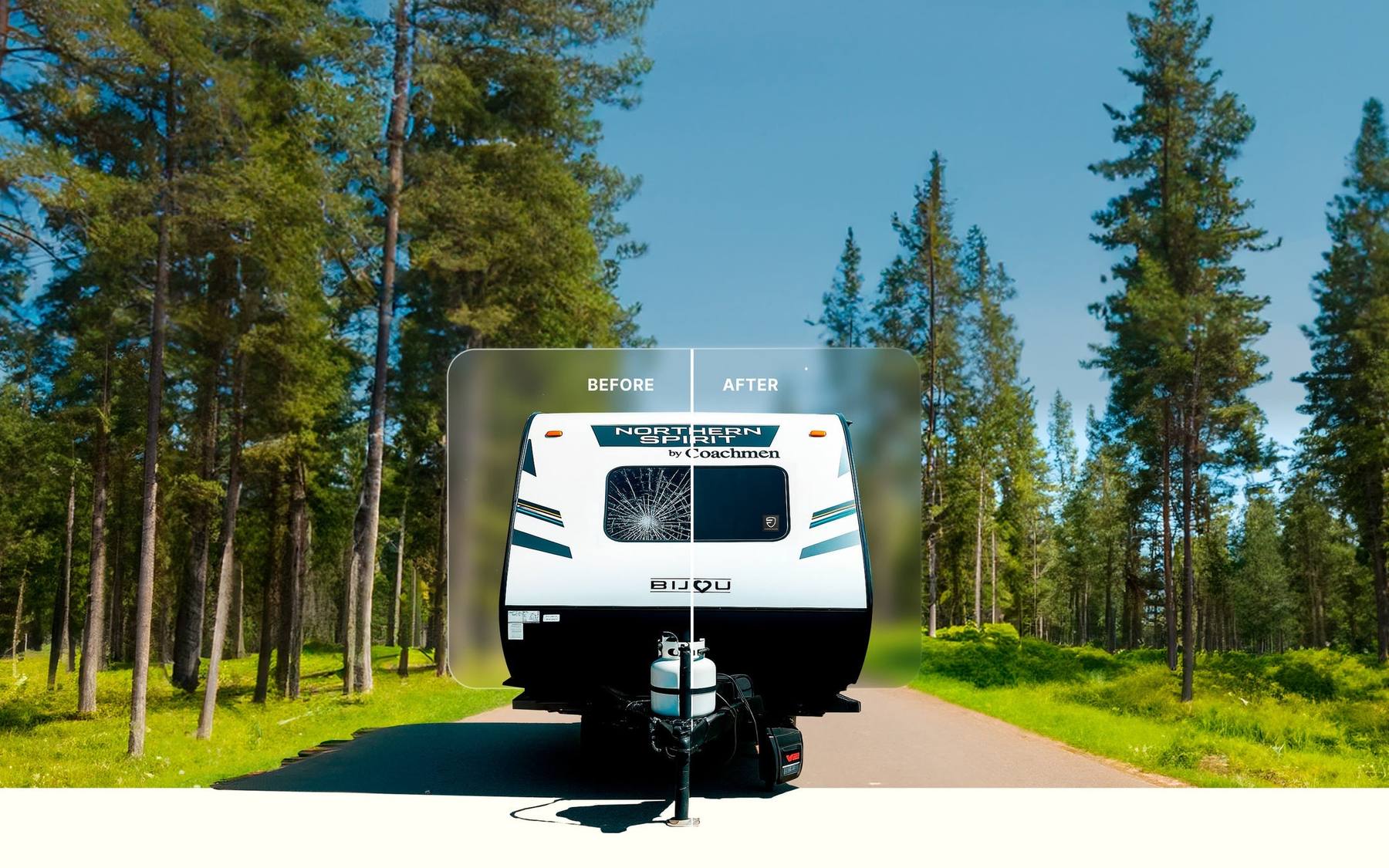
RV Windshield Replacement: The Real Numbers
If you've ever had a rock hit your RV windshield at highway speed, you know the sinking feeling. That crack isn't just cosmetic — it's a safety issue and an expensive one. Here's what RV windshield replacement actually costs in 2026.
Cost by RV Class
- Class A Motorhome: $1,500 – $3,500+ for the windshield alone. Large, curved glass with specialized coatings. Labor adds $300–$800. Total: $1,800 – $4,300.
- Class C Motorhome: $800 – $2,000 for the glass. More standardized sizes based on the Ford/Chevy chassis. Total with labor: $1,100 – $2,500.
- Fifth Wheels & Travel Trailers: $400 – $1,200 depending on glass size and if it's a front cap window or full windshield. Labor: $200–$400. Total: $600 – $1,600.
What Drives the Cost Up
Curved glass costs 2–3x more than flat glass. Heated windshields add $500+. Tinted or coated glass with UV protection or rain-sensing wipers adds another $200–$400. And if you need mobile repair at a campground instead of a shop, expect a $150–$300 surcharge.
Does Insurance Cover It?
Comprehensive coverage typically covers windshield replacement, but your deductible matters. If your deductible is $500–$1,000 and the replacement is $1,200, you're paying most of it anyway. Frequent claims also raise your premiums — some RV owners report 15–25% increases after windshield claims.
The Cheaper Solution: Prevent the Damage
A magnetic windshield cover costs a fraction of one replacement. FIT Protection covers use N52 neodymium magnets with 250 lb pull force to create a seal that holds at highway speeds. The marine-grade vinyl absorbs rock impacts that would otherwise crack your glass.
For $350–$500, you get a custom-fit cover for your exact RV model that prevents the $1,800–$4,300 replacement. It pays for itself the first time it stops a rock.
Bottom Line
RV windshield replacement is expensive, inconvenient, and often not fully covered by insurance. Prevention is the smart move. A purpose-built magnetic cover like FIT Protection stops the damage before it happens — and costs less than your insurance deductible.