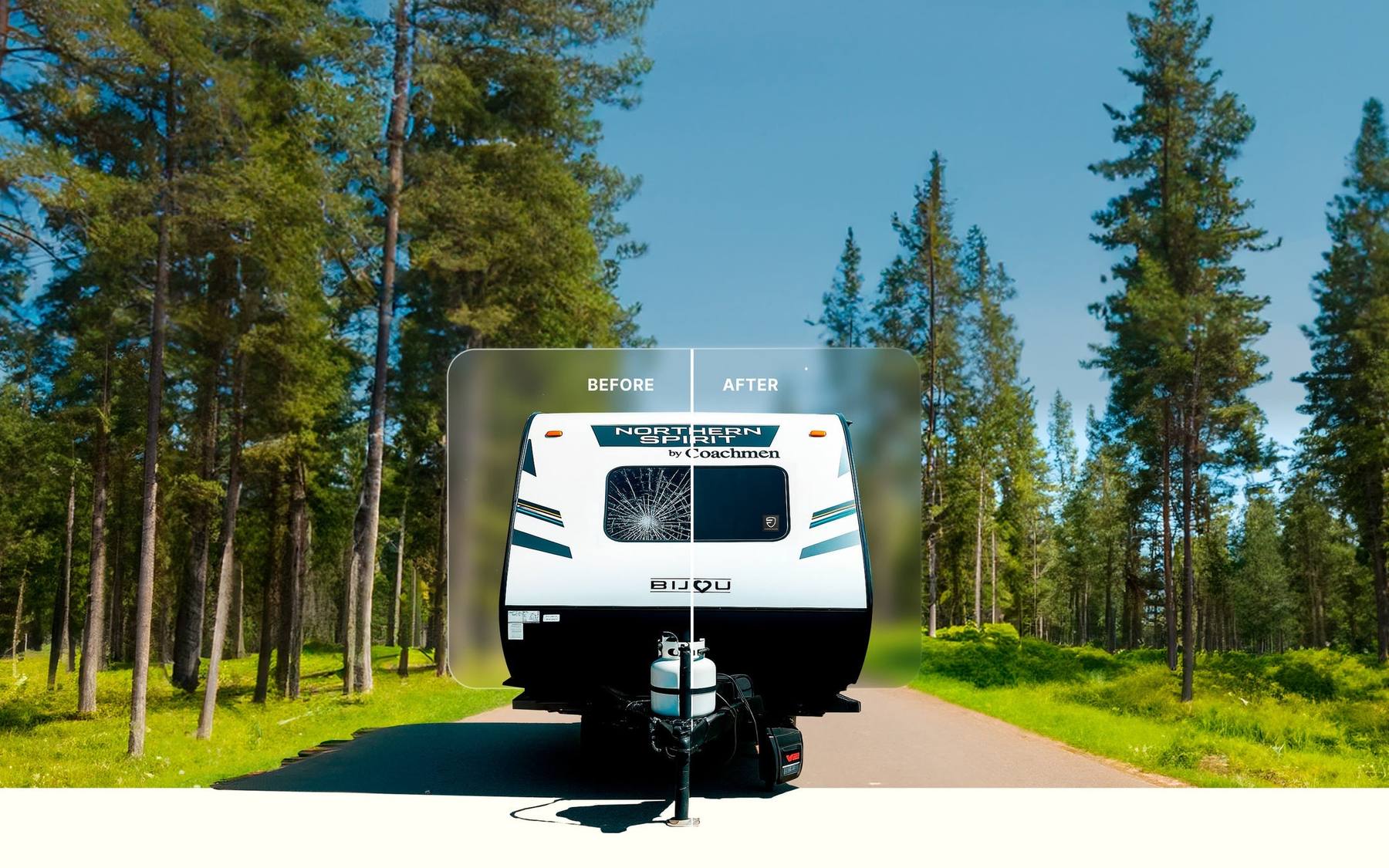
A 1-inch hailstone falls at approximately 50 mph terminal velocity. A 2-inch hailstone falls at 70 mph. Either is enough to crack laminated windshield glass, dent fiberglass roofs, and break the urethane seal that keeps water out of the front cap. RVs are uniquely vulnerable because their bodies are mostly flat and unsupported — there's no structural rigidity to absorb the impact like a car body provides.
Your comprehensive policy probably covers most of the structural repair. But it won't cover the 8-14 weeks of downtime, the deductible, the diminished resale value, or the cumulative damage from multiple smaller storms over the rig's life.
TL;DR
- 1-inch hail = laminated windshield crack risk + roof dents
- 2-inch hail = guaranteed windshield damage on unprotected RV
- Comprehensive insurance covers structural repair minus your deductible ($500-$2,000)
- Insurance does NOT cover: downtime, missed trips, diminished resale value, cumulative cosmetic damage
- A windshield cover prevents 90%+ of hail strikes from reaching the glass
What hail actually does to an RV
Three impact zones on an RV during a hailstorm:
1. Windshield (most expensive damage)
The windshield is the largest piece of glass on the rig. Laminated safety glass cracks but doesn't shatter — which is good for safety, bad for cosmetics and water-tightness. A 1-inch hail strike to a Class A windshield can produce a 4-6" crack on impact. Replacement cost: $3,000-$8,500.
2. Roof and front cap (most damage by area)
The fiberglass front cap and roof of an RV are 1/8" to 3/16" thick — thinner than a typical car roof. Hail leaves visible dents AND cracks the gel coat. Untreated gel coat cracks let water into the substructure within 30-90 days, causing rot. Repair cost: $1,500-$6,000 depending on extent.
3. AC shrouds and roof equipment
Roof-mounted air conditioners, satellite dishes, and vent covers are plastic. Hail shatters them. Replacement cost: $200-$800 per unit.
What comprehensive insurance covers
Standard RV comprehensive policies cover hail damage as a "weather event" — same category as wind, lightning, falling objects. The coverage is generally:
| Damage type | Covered? | Out-of-pocket |
|---|---|---|
| Windshield replacement | Yes | Deductible only |
| Roof repair | Yes | Deductible only |
| Front cap repair | Yes | Deductible only |
| AC shroud replacement | Yes | Deductible only |
| Cosmetic dent without crack | Sometimes | Variable |
| Multiple storms / cumulative damage | Conditional | Variable |
| Diminished value (resale loss) | Rarely | Full |
Typical deductible: $500-$2,000 depending on your policy. On a $10,000 hail-damage repair, you pay your deductible and insurance pays the rest.
What insurance DOES NOT cover
Five common gaps that surprise owners:
1. Loss of use / hotel costs during repair
RV repair after major hail can take 8-14 weeks. If you were planning a trip during that window, you're paying for hotels, rentals, and missed reservations out of pocket. Some policies have limited "loss of use" coverage; most do not.
2. Diminished value
A repaired RV — even one repaired to factory spec — sells for $3,000-$8,000 less than an undamaged comparable. Insurance generally does not reimburse this loss. You absorb it at resale time.
3. Aftermarket additions
If you've added solar panels, satellite dishes, or roof-mounted accessories that weren't on the original sale paperwork, comprehensive may not cover them. Document and itemize before storms.
4. Cumulative cosmetic damage
A small dent from one storm + a small dent from another storm + minor gel-coat crazing — insurance generally won't cover gradual accumulation. They cover discrete events.
5. The deductible (this is the big one)
A $1,000 deductible on a $10,000 repair sounds reasonable. But if you also have $500 in cosmetic dent damage that didn't reach the deductible, you absorb that. Multiple small claims can also raise your premium.
Hail-prone regions in the US
Hail risk varies dramatically by region. According to NOAA storm data:
| Region | Annual hail events | Average max size |
|---|---|---|
| Texas Hail Alley | 25-40 | 2.5-3.5" |
| Oklahoma / Kansas | 20-35 | 2-3.5" |
| Nebraska / Wyoming | 15-25 | 2-3" |
| Colorado Front Range | 10-20 | 2-3" |
| Southeast | 5-15 | 1-2.5" |
| Pacific Northwest | 2-5 | <1" |
| Northeast | 5-10 | 1-2" |
If you store or travel in the top three rows, hail protection isn't optional.
How a windshield cover protects against hail
A quality windshield cover serves as a sacrificial layer between hail and your glass. Three mechanisms:
- Energy dissipation — the cover fabric absorbs and disperses some of the strike energy before it reaches the glass. Fabric tension across a flat surface spreads the load over a wider area than a point impact.
- Direct deflection — smaller hail (1" or less) bounces off without transferring full energy
- Edge protection — covers wrap onto the A-pillar trim and roof line, protecting the front cap edges that are vulnerable to gel-coat cracking
A FIT Protection cover with marine-grade vinyl has been documented preventing cracking from up to 1.75" hail in customer reports. Above that size, hail will damage the cover (which is replaceable at ~$429) but typically not the glass underneath (which is $3,000-$8,500 to replace).
Cover damage vs glass damage
When hail does reach the cover:
- Up to 1" hail: cover usually undamaged or minor dimples (still serviceable)
- 1-2" hail: cover may have visible impact marks; replace within 12 months for full UV protection
- 2-3" hail: cover is sacrificed; glass usually intact underneath
- 3"+ hail: cover destroyed; glass may also be damaged but at reduced severity
Even in the worst case, the cover absorbs enough energy that windshield repair (when needed) costs significantly less than an unprotected impact.
What to do AFTER a hailstorm
If you have a cover and it took hail:
- Inspect the cover — replace if you see fabric punctures, frame separation, or magnetic backing damage
- Check the windshield — if the cover absorbed the hit, the glass should be intact, but verify
- Check the roof and front cap — covers don't protect these; document any gel-coat cracking immediately
- File a claim within the policy window — most insurers require notice within 48-72 hours of the event
If you don't have a cover and took a hailstrike:
- Document everything immediately — photos, video, timestamps
- File a claim ASAP — delay can complicate weather-event corroboration
- Get multiple repair estimates — RV body shops vary widely in pricing
- Watch for water intrusion — in the days following, leaks can develop where gel coat cracked
What insurance companies want to see in a claim
Successful hail damage claims usually include:
- Photos of the rig before the storm (helpful but not always available)
- Photos immediately after with timestamps
- NOAA storm report or local news weather data confirming the event
- Multiple repair estimates from RV-specific body shops
- Specific damage list — windshield + roof + AC shrouds, etc.
Insurers want to corroborate that the damage came from a discrete weather event, not gradual wear.
Storage strategies for hail-prone regions
Beyond a windshield cover, owners in Hail Alley typically employ:
- Indoor storage — covered or fully-enclosed when not in use ($150-$400/month)
- Carport or shade structure — partial protection, helps with smaller hail
- Mobile hail covers — full-rig hail blankets that wrap the entire roof and sides (specialized product, $800-$2,000)
- Geographic storage — some owners truck their rig to lower-risk regions during peak hail season (April-July in TX/OK)
A windshield cover handles the most expensive single component (the windshield itself); full-rig protection requires a combination of strategies.
See FIT covers for hail-prone owners → About the patented magnetic mount →
FAQ
Will my RV insurance go up after filing a hail damage claim? Comprehensive claims (weather events) generally don't raise premiums the way at-fault accident claims do, but multiple comp claims in a short period can trigger reviews. Single hail claims usually don't affect premium materially.
How big does hail need to be to crack an RV windshield? Approximately 1 inch in diameter is the threshold for cracking laminated RV windshield glass at terminal velocity. Smaller hail typically dimples but doesn't crack. Larger hail almost always cracks unprotected windshields.
Can I file a hail damage claim months after the storm? Generally no. Most insurance policies require notice within 48-72 hours of the weather event. After that, claims are often denied for "delayed reporting" — even if the damage is real.
Does a windshield cover prevent ALL hail damage to an RV? No — a windshield cover only protects the windshield. It doesn't protect the roof, AC shrouds, side panels, or rear glass. For full hail protection, you'd need a full-rig cover or indoor storage during peak hail season.
Will comprehensive insurance cover replacing a windshield cover damaged by hail? Most policies cover the cover as part of "RV equipment" but verify with your agent. If you upgrade to a $429 FIT cover, document the purchase and add it to your itemized policy.
How do I know if hail actually damaged my windshield or just bounced off? Visible chips, cracks, or a "spider web" pattern in the laminated glass indicates damage. Bouncing-off hail leaves no mark. If the windshield is uncertain, get it inspected by an auto-glass tech within 30 days — they can spot stress fractures invisible to the naked eye.