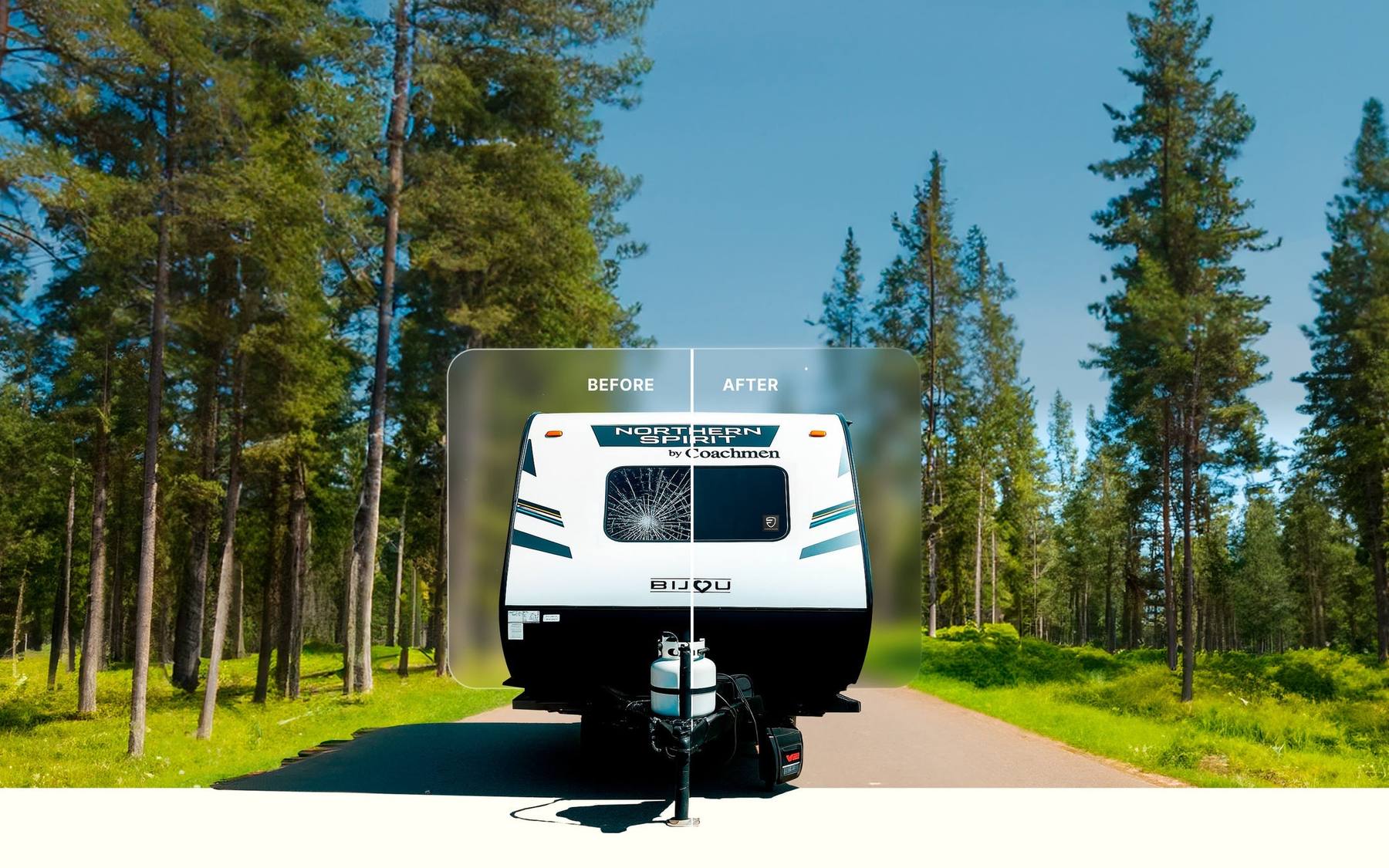
A premium marine-grade UV-block RV windshield cover lasts 7-10 years under typical seasonal use (4-6 months active, 6-8 months stored). A cheap polyester cover from Amazon lasts 12-18 months before fabric UV degradation makes it ineffective. The 5-7× lifespan difference is what makes premium covers cheaper per year despite the higher up-front.
The actual lifespan depends on three things: fabric quality, mount system, and your usage pattern.
TL;DR
- Premium UV-block vinyl: 7-10 years (FIT-grade)
- Mid-tier acrylic-coated: 4-6 years (ADCO-grade)
- Cheap polyester: 12-18 months (Camco-grade)
- Magnets and binding: indefinite
- Replacement signal: UV blocking drops below ~80% (test by holding to the sun)
What kills a windshield cover
Six things degrade a cover over time:
1. UV exposure (top cause)
The same UV that's destroying your dashboard also degrades the cover fabric. Marine-grade vinyl resists UV degradation 3-5× longer than basic polyester. After enough cumulative UV exposure, the fabric loses its UV-blocking treatment and starts letting UV through to the dashboard.
2. Heat cycling
Cover fabric expands and contracts with temperature swings. Thousands of cycles loosen the fabric weave and create microscopic gaps. Eventually visible loose-weave patches appear, and UV blocks drop.
3. Folding stress
Folding the same way every time creates crease lines that wear through faster than the surrounding fabric. Rolling the cover instead of folding extends life.
4. Cleaning damage
Aggressive cleaners (degreaser, bleach, abrasive scrub) strip the UV coating. The fabric still looks black but no longer blocks UV. Mild soap and water is the only safe cleaning method.
5. Mechanical wear
Strap covers wear at attachment points. Magnetic covers don't have mechanical wear — the binding holds for the life of the fabric.
6. Rodent and insect damage
During storage, mice or insects can chew holes. Rodent deterrents prevent this.
How premium fabric extends life
Marine-grade UV-block vinyl differs from basic polyester in three ways:
1. Multi-layer construction
Premium vinyl uses 4-5 layers: outer protective coat, UV-block compound layer, structural weave, thermal-reflective inner, and inside woven backing. Each layer has a specific function. Damage to one layer doesn't compromise the others.
2. Embedded UV inhibitors
The UV-block compound is embedded WITHIN the vinyl, not coated on top. Coated UV protection wears off in months; embedded UV blockers last years. This is why premium covers maintain 99%+ UV blocking through year 7+.
3. Marine-grade testing
Marine vinyl is tested in saltwater, intense sun, and abrasive conditions. The standards are stricter than RV-cover specs because boats demand more. Buying marine-grade vinyl for an RV cover means you're getting tested-for-harder-than-you'll-experience material.
Real-world lifespan data from FIT customers
We've tracked cover replacements from FIT owners since 2018. The data:
- Median FIT cover age at replacement: 8 years
- Most common replacement reason: owner upgraded rig, not cover failure
- Failure modes when they happen:
- 35% — fabric UV degradation
- 25% — owner damage (driving with cover on, branch tear)
- 20% — never replaced; rig sold with original cover
- 15% — accident or hailstorm
- 5% — manufacturing defect (covered under warranty)
Translation: most FIT owners don't actually replace the cover during their ownership. They sell the rig with the original cover.
When to replace your cover
Five signs it's time:
1. Fabric is brittle
Hold a corner of the cover to bright sunlight from inside (you holding the cover, light shining at you). If you can see daylight through the fabric, UV blocking is gone. Replace.
2. Visible UV degradation
The black surface fades to dark grey or has uneven coloring. The fabric structure has degraded.
3. Crease lines that won't smooth out
Fabric memory is gone where it's folded. The cover doesn't sit flush against the windshield anymore.
4. Magnetic backing slipping
For magnetic covers, if the rubberized magnetic backing has hardened and lost grip on inside glass, replace the magnets (not the whole cover) with the Patented Removable Magnets upgrade.
5. Holes, tears, or punctures
Branch slap, hail, or improper folding can create holes. Small holes (under 1") can be patched with adhesive vinyl repair. Larger damage = replace.
What to do when you replace
Three options:
1. Same model, refresh
Order the same cover. Same fit, same magnets (if you have separate magnet purchase). Easy.
2. Upgrade to a newer-spec cover
If your current cover is 7+ years old, the materials may have improved. Worth checking the latest spec.
3. Switch from strap to magnetic
If you currently have a strap cover wearing out, this is the time to switch to magnetic. Better fit, longer lifespan, no rig damage.
Storage habits that extend life
Three habits that add 2-4 years to cover life:
1. Roll, don't fold
Rolling spreads the wear across the entire fabric instead of concentrating it on fold lines. Use the storage bag (rolled) instead of folding into a smaller package.
2. Dry before storage
Wet fabric mildews. After rain or condensation, hang the cover for 15 minutes before rolling and storing.
3. Indoor storage between uses
A garage, basement, or climate-controlled storage during the off-season prevents continued UV degradation when not in use.
Cleaning to extend life
The right cleaning approach:
- Mild dish soap + water — gets bug splatter, dust, light dirt
- Microfiber cloth or soft brush — non-abrasive
- Rinse with hose — removes residue
- Air dry completely — never machine dry
Never use: - Harsh detergents (degreaser, bleach) - Pressure washer at close range (can lift UV coating) - Dryer or direct heat (warps vinyl) - Abrasive scrubbers (scratches surface)
The math on cover lifespan
A premium cover at $429 lasting 8 years = $54 per year. A cheap cover at $130 lasting 18 months = $87 per year, plus the indirect cost of less effective UV protection over those 18 months.
Premium isn't just longer-lasting; it's also cheaper per year. This is why we recommend buying once vs. cycling through 4-6 cheap covers over the same period.
See FIT covers by model → Patented Removable Magnets (replacement only) →
FAQ
How do I know if my windshield cover is still effective? Hold a corner of the cover to bright sunlight from inside. If you can see daylight through the fabric, UV blocking is gone and the cover should be replaced. Premium covers maintain opacity for 7-10 years.
Will a windshield cover last longer if I store the RV indoors? Yes, modestly. Indoor storage during off-season eliminates UV exposure during 6+ months/year, which roughly doubles cover lifespan in pure UV terms. The bigger factor is whether you use the cover at all — covered indoor storage barely needs a cover; uncovered outdoor storage needs one badly.
Can I machine wash my RV windshield cover? No. Machine washing tears the fabric and the agitation strips the UV coating. Hand wash with mild soap and water, hose rinse, air dry. Only.
How often should I clean my windshield cover? After each use during the season — quick rinse to remove dust and bug splatter. Deep clean once or twice a year with mild soap. End-of-season clean before storage.
Do magnetic windshield cover magnets wear out over time? Neodymium magnets retain 99%+ of their hold strength for 50+ years under normal conditions. The rubberized backing that contacts the inside glass eventually hardens (5-10 years) and can be replaced as a separate part.
Is it cheaper to buy a new cover every 2 years or one premium cover every 8 years? The premium cover at $54/year is cheaper than cycling cheap covers at $87/year — and you avoid the variability in UV protection that cycling cheap covers introduces.