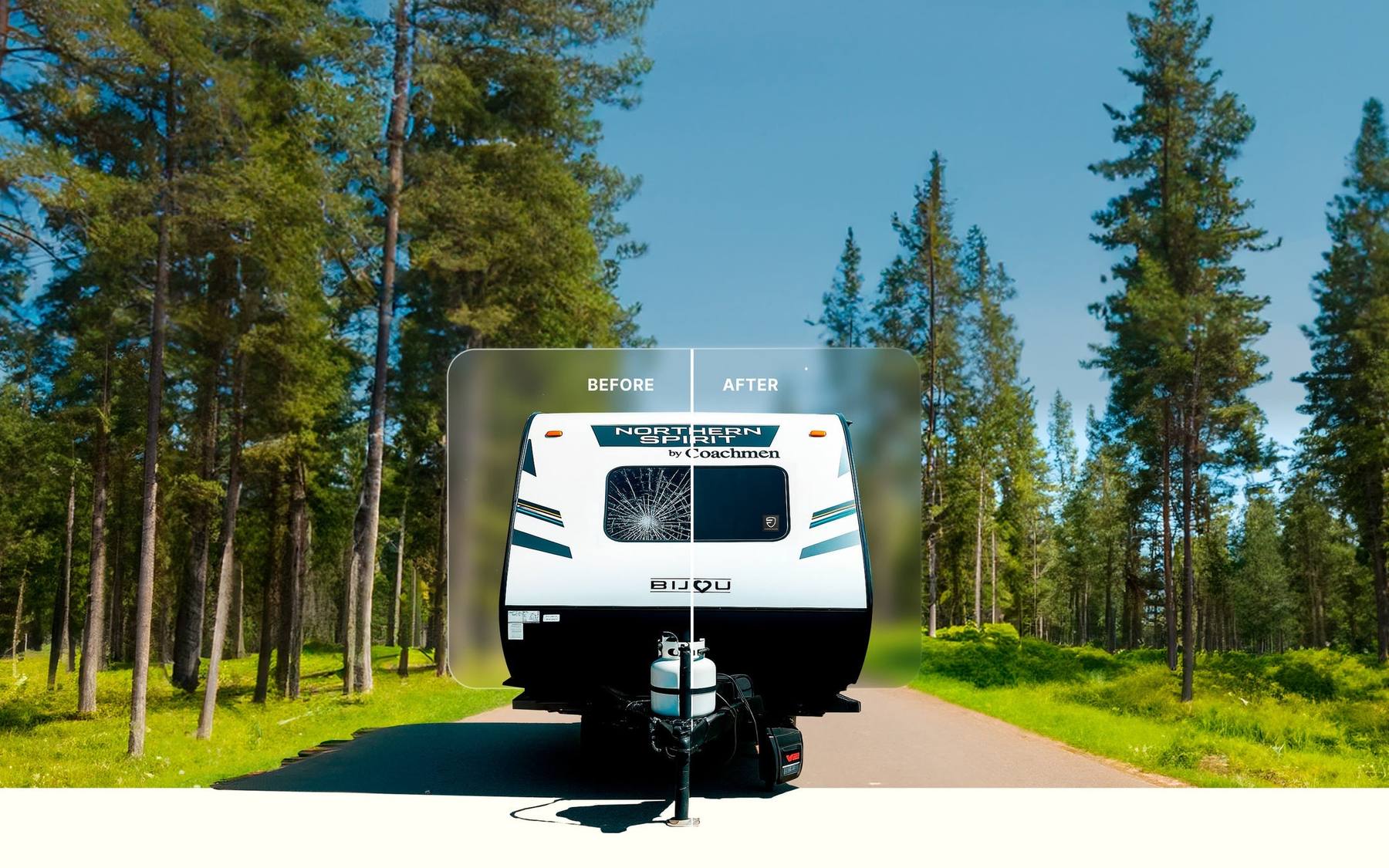
A full RV windshield replacement runs $2,500 to $8,500 in 2026, depending on rig class, glass curvature, and whether your model is still in production. Class A motorhomes sit at the top of the range — owners we've talked to in the last 90 days have paid as much as $11,400 when the OEM glass had to be sourced from the original manufacturer overseas.
Here's the part most owners don't know until it's too late: most comprehensive insurance policies cover the glass, but they don't cover the eight to fourteen weeks of downtime while you wait for the replacement to ship and get installed.
TL;DR
- Class A motorhome windshield: $4,000–$8,500+ (curved 2-piece glass, longest lead time)
- Class C motorhome: $1,800–$3,500 (often shares glass with Ford/Mercedes chassis)
- Fifth wheel / travel trailer: $1,200–$2,800 (usually flat or single-curve glass)
- UTV/side-by-side: $400–$1,500 (varies wildly by aftermarket vs OEM)
- Insurance gap: deductibles + downtime + paint damage from leaking water + dash UV damage are usually NOT covered
Why RV windshields cost so much more than car windshields
Three reasons RV glass commands a premium:
1. Curvature and size
Class A motorhomes use two-piece curved laminated glass that's roughly 6× the surface area of a passenger car windshield. The molds for this glass are expensive to retool, so manufacturers run them in batches — meaning if your model is two generations old, you may be waiting months for the next production run.
2. Limited installer pool
A typical auto-glass shop can't handle a 40-foot motorhome. The installer pool drops to specialized RV glass shops (often 1–3 in any given metro area), and their hourly rate is usually 2× a standard auto-glass tech.
3. Frame and trim damage during removal
RV windshields are bonded with a much heavier urethane than passenger vehicles. A clean removal preserves the surrounding fiberglass cap and trim. A bad removal cracks the cap and now you're paying for cosmetic body work too — easily another $800–$2,000.
What insurance covers (and what it doesn't)
| Item | Comprehensive Coverage? | Typical Out-of-Pocket |
|---|---|---|
| Glass replacement | Usually yes | $500–$2,000 deductible |
| Labor / installation | Usually yes | (rolls into deductible) |
| Loss-of-use / hotel during downtime | Rarely | $1,500–$5,000 |
| UV damage to dashboard | No | $800–$3,500 |
| Water damage from staged crack | Conditional | Variable, often denied |
| OEM glass (vs aftermarket) | Sometimes restricted | +$500–$2,000 |
The single biggest gap most RV owners don't realize: diminished value claims. A motorhome with replaced glass — especially aftermarket glass that doesn't perfectly match the OEM tint or curvature — often resells for $3,000–$5,000 less. Insurance won't reimburse that.
How to actually prevent this in the first place
Three things drive ~80% of all RV windshield damage we've seen in seven years of building covers:
- Stress cracks from sun cycling — UV warps the trim and frame; the glass is the first thing to fail. A cover that blocks 99%+ of UV stops this entirely.
- Hail and tree-debris strikes during storage — most RVs sit 9+ months a year. A 1.25" hailstone at terminal velocity will crack laminated glass on impact.
- Pressure-washer water intrusion — when owners detail the rig and force water past a tired urethane seal, it cures the glass into the frame in a way that makes the next replacement 2× harder.
A custom-fit cover priced at $349–$499 prevents the underlying causes of all three, and pays for itself the first time you avoid even a partial claim.
Should you DIY the replacement?
Almost never. The two cases where it's defensible: - You own a Class B van conversion built on a Mercedes Sprinter or Ford Transit chassis — those use stock glass with a healthy aftermarket installer network. - You have a flat-glass utility trailer or specific older toy haulers where the glass is bolted (not bonded) into a metal frame.
For everything else, a botched DIY removal usually triples the eventual cost. Pay the specialist.
How long is "too long" to delay a repair?
If you have a chip smaller than a quarter and shorter than 6", 30 days max before getting it filled. A chip that small still allows water and UV in, and the moment it spreads past 6", insurers reclassify it from "repair" to "replace" and your deductible jumps.
If you have an active crack, the rig should not be moved more than necessary. Vibration spreads cracks geometrically — a 4" crack can become a 14" crack on a single cross-state drive.
The case for a custom-fit cover
A FIT Protection cover blocks 99.9% of UV, prevents hail strikes from cracking laminated glass, and keeps the frame seal cool — preventing the slow expansion-contraction cycles that cause stress cracks in the first place. We custom-build for 60+ RV models and 26 UTV platforms, with a one-time investment that typically pays back the first year.
Browse RV covers by model → See UTV covers →
FAQ
How much does it cost to replace a Class A motorhome windshield? Most Class A windshield replacements in 2026 run $4,000–$8,500 fully installed. Some Tiffin, Newmar, and Entegra models with custom-curve glass can exceed $11,000 once labor, trim, and OEM glass sourcing are included.
Will my RV insurance cover the full windshield replacement cost? Comprehensive policies typically cover the glass and labor minus your deductible (commonly $500–$2,000), but they do NOT cover loss-of-use during the 8–14 weeks of downtime, UV damage to your dashboard, or diminished resale value from aftermarket glass.
Are RV windshield covers worth the cost? For RVs valued over $30,000, a $349–$499 custom-fit cover prevents the three most common causes of windshield damage (UV stress cracks, hail strikes, frame-seal degradation) and typically pays for itself within the first year of ownership through avoided claims and reduced UV damage.
How long does an RV windshield replacement take? Once the glass arrives at the installer, the work itself takes 4–8 hours. The longer wait is sourcing — current OEM lead times for Class A motorhome glass run 8–14 weeks in 2026, with longer waits for older models.
Can I drive my RV with a cracked windshield? Legally varies by state, but a crack longer than 6" in the driver's line of sight is unsafe and often a citation in commercial inspection states. Vibration from highway driving can extend a crack from 4" to 14" in a single trip.
What's the difference between OEM and aftermarket RV windshield glass? OEM glass matches the original tint, curvature, and acoustic damping of the factory part. Aftermarket glass is typically $500–$2,000 cheaper but can affect resale value by $3,000–$5,000 and may have slightly different optical clarity at the curved edges.