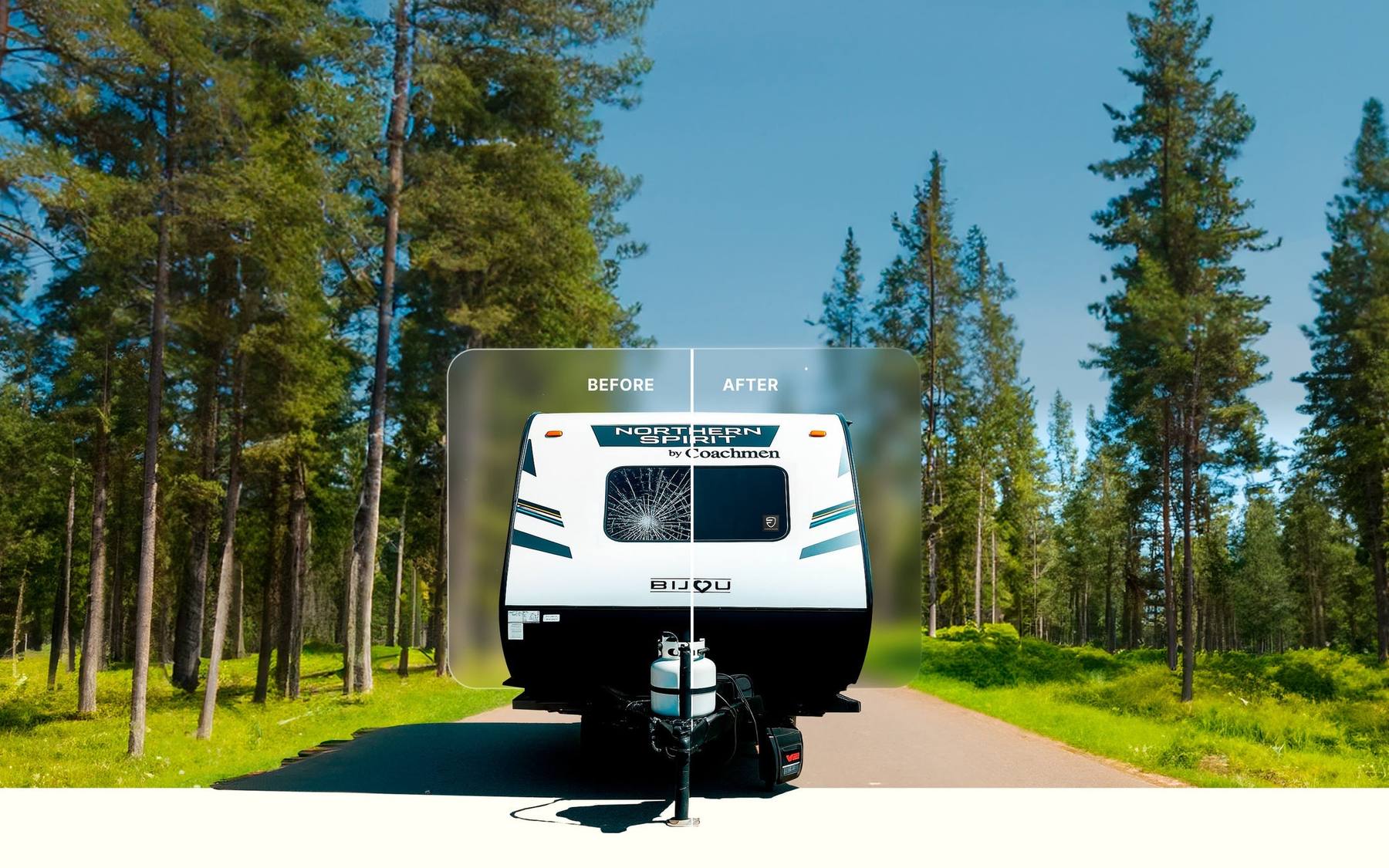
Yes — a windshield cover that blocks 99%+ of UV radiation stops the cracking, fading, and warping that destroys RV dashboards within 4–7 years of unprotected sun exposure. The two-piece dashboards on Class A motorhomes are particularly vulnerable: most start showing visible UV damage at the 3-year mark in southern states, and they're not cheap to replace.
The mechanism is well-documented in materials science: UV-A and UV-B radiation breaks down the polymer chains in dashboard plasticizers, releasing the volatile compounds that keep the surface flexible. Once those evaporate, the plastic becomes brittle and the surface cracks.
TL;DR
- UV destroys dashboard plastic in 4–7 years in southern US states
- Dashboard replacement on a Class A motorhome runs $2,800–$6,500 installed
- A windshield cover blocking 99%+ UV stops the damage at the source
- Tinted windshields delay damage but don't prevent it (tint blocks ~50% UV; covers block 99%+)
- Damaged dashes drop resale value $4,000–$8,000 even when otherwise in good shape
What UV actually does to dashboard plastic
Dashboard plastic is mostly PVC, ABS, or polypropylene, blended with plasticizers and UV inhibitors at the factory. Those UV inhibitors get consumed over time. Once they're depleted (typically 3–5 years of direct exposure), the plasticizers are next: they evaporate, leaving brittle polymer behind.
You can usually tell where a dash is in this lifecycle:
- Year 1–2: No visible damage; UV inhibitors still active
- Year 3–4: Slight surface dulling, color fade beginning at high points
- Year 5–6: Hairline cracks at corners and around vents
- Year 7+: Major cracking, sometimes warping; surface releases dust under touch
- Year 10+: Total replacement needed
Southern states (TX, AZ, NV, FL, CA) accelerate this by 30–40% vs northern states because of higher UV index and cabin temperature peaks.
Why "tinted glass" isn't enough
Most factory and aftermarket RV windshield tints block roughly 45–55% of UV. That's better than nothing — but it lets through enough UV to damage the dash within 5–8 years anyway.
A proper windshield cover with UV-block fabric blocks 99–99.9% of both UV-A and UV-B, which is what stops the damage entirely. The fabric also blocks the visible-light heat load, which is what causes the dash temperature to spike to 180–220°F in direct sun. Lower temperatures = slower degradation of remaining UV inhibitors.
The compound damage problem
UV damage doesn't stop at the dashboard. It cascades:
- Dashboard plastic dries and cracks
- Dashboard wiring harness loses insulation flexibility, creates intermittent electrical faults
- Steering column trim fades and warps
- Upper window trim cracks and pulls away from the cap
- Front-cap fiberglass gel coat chalks and oxidizes
- Window seals and weatherstripping harden and shrink — leading to water intrusion
The total cost of compound UV damage on a 7-year-old unprotected Class A motorhome runs $8,000–$15,000 to fully restore. A $349–$499 cover for the same period prevents 90%+ of this.
What to look for in a UV-blocking cover
Three things matter:
1. Fabric UV rating
Look for a UPF 50+ or "blocks 99%+ UV-A and UV-B" claim with a third-party test reference. Marine-grade UV-block vinyl or treated polyester are the two materials that actually deliver this. Cheap covers using basic polyester block 70–80% at most.
2. Edge coverage
The cover needs to wrap past the windshield onto the side cab windows if you have them, or at minimum cover the full A-pillar trim. UV that gets in around the edges still hits the dashboard at low angles, especially in morning/evening sun.
3. Thermal insulation
A reflective inner layer or thermal-break construction prevents heat conduction through the cover into the cabin. This keeps dash temperature lower, which extends the life of remaining UV inhibitors.
FIT Protection covers use a 5-layer marine-grade UV-block vinyl with 99.9% UV-A/UV-B blocking and a reflective thermal layer.
What about reflective sunshades from the auto-parts store?
The folding accordion-style sunshades you can buy at AutoZone for $20 are designed for cars. Three reasons they're ineffective on RVs:
- Fit gaps — they're sized for car windshields and leave 6"+ gaps on either side of an RV windshield
- Sit ON the dash — they protect the dash directly under them but the surrounding dash gets the full UV load
- Heat-sink to dashboard — the metallic coating reflects heat right back into the dash plastic
Use one in your tow vehicle, not your RV.
How long does a properly-protected dashboard last?
We've talked to FIT customers who bought a 10-year-old motorhome where the previous owner used a cover from day one — the dashboard looked 2 years old. Compare to an 8-year-old motorhome from a non-cover owner: the dash had visible cracking, faded buttons, and warped trim.
Real-world: a high-quality UV-block windshield cover can extend dashboard life from 6–8 years to 18–22 years. That's the difference between buying a used motorhome and immediately needing $5,000 of dash work, vs. one where it's still factory.
Beyond the dashboard
A good windshield cover also protects:
- Captain's chair leather/vinyl — direct sun = cracking in 3–5 years
- Upper window valances and trim — UV-cycling causes fabric dye fade and adhesive failure
- Floor vinyl/laminate near the front — heat exposure causes seam separation
- Ceiling fabric — yellowing from prolonged radiated heat
The whole front 8–10 feet of cabin lives or dies based on whether the windshield is covered when parked.
See covers for your rig → Compare cover materials →
FAQ
How much does it cost to replace an RV dashboard? Class A motorhome dashboard replacement runs $2,800–$6,500 installed depending on the year, model, and whether it's a one-piece or two-piece dash. Class C dashboards are often $1,200–$2,500. The labor is the bigger cost — replacement parts themselves are usually $400–$1,800.
Will a windshield cover prevent ALL dashboard fading? A 99%+ UV-blocking cover will prevent virtually all UV-driven fading. Some fade can still occur from leaked UV (around edges) and from heat alone, but the rate is dramatically reduced — typically 80–90% slower than uncovered.
Do RV windshield covers prevent dashboard cracks? Yes. Cracks come from UV breaking down plasticizers in the dash plastic. A cover that blocks 99%+ UV stops the underlying chemical degradation that causes cracking. We've seen 15-year-old dashes look factory-fresh with consistent cover use.
Can I just use window tint instead of a cover? Tint helps but isn't enough. Most factory or aftermarket tints block 45–55% of UV. To prevent UV damage to the dashboard, you need 99%+ blocking — which requires a windshield cover. Tint + cover gives you the best result.
Does a cover protect against heat as well as UV? A reflective-layer cover prevents both UV damage AND heat buildup. Cabin temperatures with a quality cover stay 30–60°F cooler than uncovered on hot days, which dramatically extends the life of all front-cabin materials.
How long does an RV windshield cover need to be on to prevent damage? Any time the rig is parked in sun for more than 4 hours. UV damage is cumulative — short exposures add up. The most important time is during long-term storage (overnight, weeks, months) when UV exposure is uninterrupted.