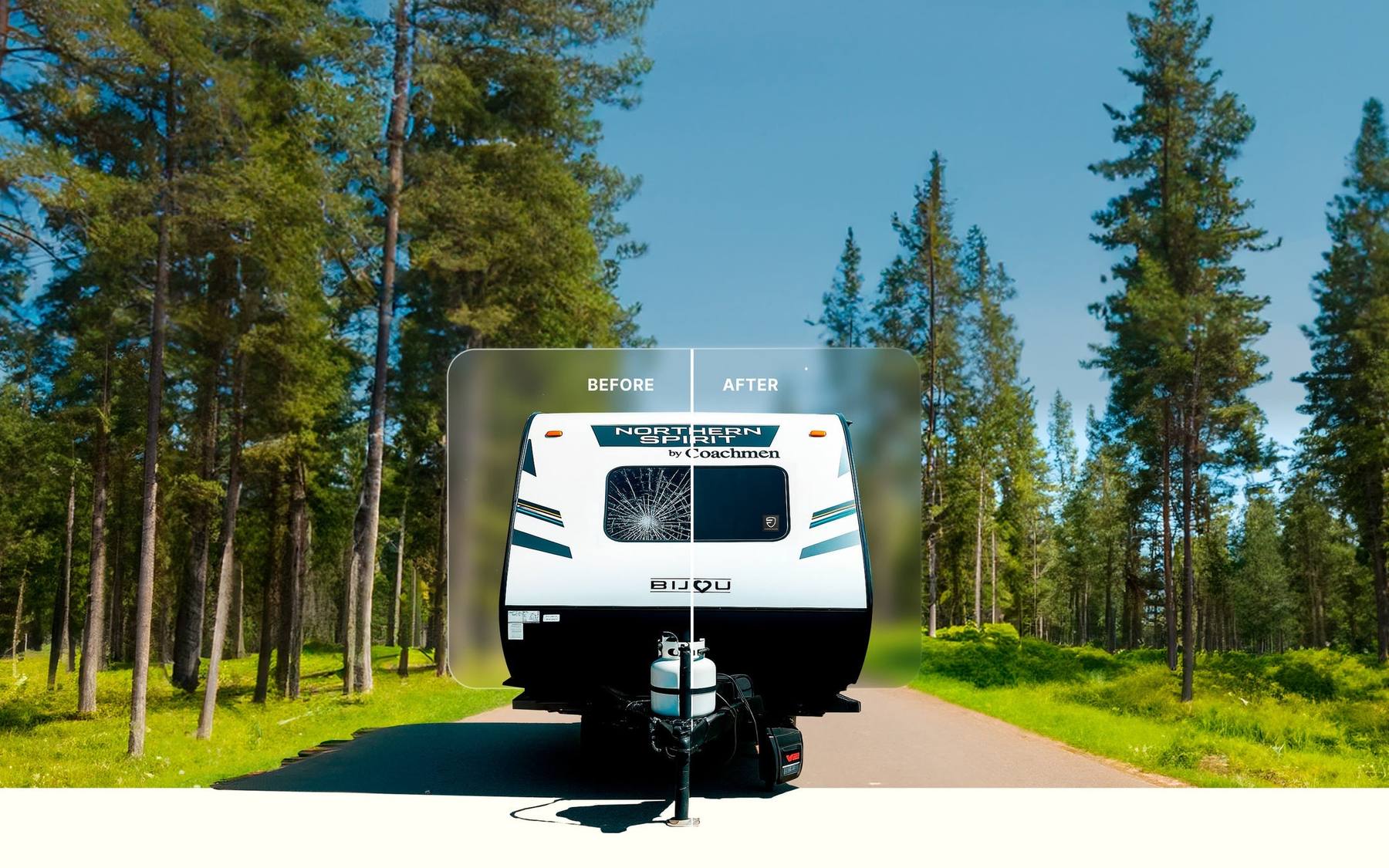
Short answer: Magnetic covers stay put at highway speeds without strap-wear on your gel coat. Strap-mounted covers cost less up front but introduce two failure modes that magnetic systems don't have — strap abrasion at contact points and gradual loosening that lets the cover billow at 65+ MPH. For trailered rigs and any cover that stays on during transport, magnetic is the structurally better choice.
How the two systems actually work
Strap-mounted covers
A vinyl or polyester shell with sewn-in webbing straps that route through your trailer's frame, around mirrors, or under the front cap. Tension is set manually — too loose and the cover flaps; too tight and the straps wear lines into the gel coat over time.
Magnetic covers
The same shell material, but with rare-earth magnets sewn into the perimeter that pull against the steel chassis or aluminum-skinned front cap. No straps, no buckles. The magnets create a uniform pull around the entire perimeter rather than concentrated tension at four or six anchor points.
Six factors that actually matter
1. Wind hold at highway speed
- Magnetic: N52 rare-earth magnets at ~850 lb total holding force across the perimeter. Stays seated through 75+ MPH sustained airflow and 50+ MPH gust events.
- Strap: Hold force depends on strap tension, which slackens over miles of vibration. Re-tightening at every fuel stop is required for transport runs over 100 miles.
2. Damage to the rig
- Magnetic: Felt-isolated magnets sit against the metal frame, not on glass. No surface contact, no abrasion.
- Strap: Webbing rubs at contact points — most commonly the front-cap edges and frame corners. Visible wear lines after 12–18 months of regular use.
3. Install time
- Magnetic: 30–60 seconds. Drop it on the front cap; the magnets pull it into seated position.
- Strap: 3–8 minutes. Route straps, tension each, check seating, re-tension if needed.
4. Cost
- Magnetic (FIT Protection): $379–$519 depending on rig size
- Strap (typical competitor): $180–$320 retail
Strap covers cost less up front. Whether the savings hold over a 5-year ownership window depends on whether you eventually need to repair gel coat wear or replace a damaged windshield because the cover lifted at speed.
5. Fit precision
- Magnetic (templated): Cut from the exact DXF of your windshield geometry. Zero gaps, no flapping edges.
- Strap (universal): Most strap covers ship as one-size-fits-most rectangles. Gaps at the corners are normal; flapping at speed is normal.
6. Storage off-season
- Magnetic: Folds flat, magnets are sewn into the perimeter — no metal hardware to scratch other gear.
- Strap: Buckles and metal hardware require padding when stored against other equipment.
When a strap cover is the right choice
Two scenarios where strap is acceptable:
- Stationary storage only (cover never sees highway speed)
- You don't care about gel coat wear — older rig you don't plan to sell
When magnetic is the only sensible choice
- You trailer the RV at all — even short trips
- You plan to sell or trade the rig within 5 years (gel coat wear hurts resale)
- You have a wraparound or radius front cap (strap geometry can't conform to curves)
- You store outdoors and need a cover that won't loosen in wind events
FAQ
Can a magnetic windshield cover damage the windshield glass?
Not if it's properly designed. FIT Protection covers use felt-isolated magnets that sit against the metal frame of the front cap, not the glass itself. The magnets hold the vinyl shell against the glass, but the magnets never touch the glass directly.
Will magnets interfere with my RV's electronics or pacemaker?
No. Rare-earth magnets at this scale are passive and the magnetic field drops off rapidly with distance — by 6 inches away, the field is negligible. Standard RV electronics, GPS, and medical devices are unaffected.
How long do the magnets last in a magnetic windshield cover?
N52 rare-earth magnets retain 95%+ of their original strength over 25+ years under normal use. The vinyl shell typically wears out before the magnets do.
Do strap-mounted covers work for towing?
They can — but require re-tensioning every 50–100 miles as straps slacken from vibration. Many strap-cover manufacturers recommend removal during transport above 55 MPH, which defeats the purpose for highway towing.
What's the cheapest way to protect an RV windshield during towing?
If budget is the only factor and the rig stays under 55 MPH, a strap cover at $180–$320 will provide basic protection. For any highway towing or premium rig (Serenova, Brinkley, Winnebago Thrive), a templated magnetic cover at $379–$519 is the better long-term investment.
Can I use a magnetic cover on an aluminum-skinned RV?
Yes — magnetic covers work on any rig with a steel chassis frame behind the front cap, which is standard on all modern travel trailers and 5th-wheels. The magnets pull through aluminum skin to bond with the steel substructure beneath.
Sources
- FIT Protection lab testing on N52 magnet retention at highway airflow speeds (2024–2026)
- Dealer service feedback on gel coat wear from strap-cover anchor points
- RV insurance industry data on windshield claim frequency by cover type